Nous traitons actuellement votre demande.
S’il vous plaît, ne fermez pas la page et ne la rafraîchissez pas.
Billets pour Florence Galleria Dellaccademia

Galleria dell’Accademia di Firenze: Tickets and Info

Ce site Internet propose des billets officiels pour cette salle. Veuillez toutefois noter qu’il ne s’agit pas du site officiel de la salle.

Billets sur smartphone

Tout ce dont vous avez besoin, à portée de main !

Service client 24 h/24, 7 j/7

Nous sommes là pour vous aider à tout moment.

Confirmation immédiate

Recevez vos billets quelques s après votre achat

Avis vérifiés sur le 100%

Des avis authentiques provenant d’utilisateurs réels et vérifiés.

Des milliers de réservations chaque mois

Chaque mois, des milliers de personnes nous font confiance pour leurs réservations.

Galerie de l’Académie : billet d’entrée prioritaire

Points forts

Évitez les files d’attente habituelles grâce à l’accès prioritaire.

Admirez la célèbre statue de David sculptée par Michel-Ange.

Découvrez les vastes collections permanentes du musée.

Découvrez les expositions temporaires aux côtés des œuvres de la Renaissance.

Découvrez certaines des œuvres d’art et sculptures les plus célèbres de Florence.

Florence : Accès prioritaire à l’Académie et visite guidée

Points forts

Profitez d’un accès anticipé pour admirer le célèbre « David » de Michel-Ange.

Profitez des conseils avisés de guides expérimentés, disponibles en plusieurs langues.

Découvrez les chefs-d’œuvre de Botticelli, Ghirlandaio et d’autres artistes de la Renaissance.

Profitez d’un accès coupe-file pour profiter pleinement de votre visite.

Les groupes de petite à moyenne taille garantissent une expérience plus personnalisée.

Galleria dell’Accademia di Firenze

The Galleria dell’Accademia in Florence stands as a vital treasure of Renaissance art, renowned worldwide for housing Michelangelo’s iconic statue, “David.” This historic gallery offers visitors a unique opportunity to explore an exceptional collection that highlights Italy’s rich artistic heritage. Whether you are an art enthusiast or a curious traveler, securing your tickets in advance ensures a seamless visit to this cultural landmark. Don’t miss the chance to experience the masterpieces firsthand – purchase your tickets today.

About Galleria dell’Accademia di Firenze
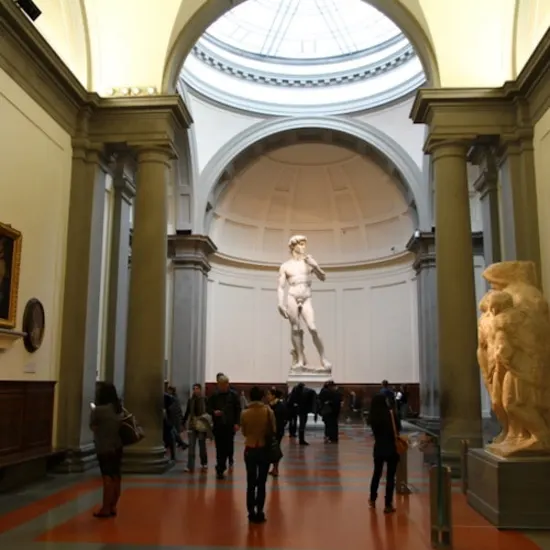
The Galleria dell’Accademia di Firenze stands as a cornerstone of Renaissance art and education in Florence, Italy. Established initially as a teaching gallery for the Accademia di Belle Arti, it has evolved into a prestigious museum showcasing masterpieces that have shaped art history. Its most renowned exhibit is Michelangelo’s iconic statue "David," which draws visitors from around the globe.

The gallery not only preserves significant sculptures but also features an exceptional collection of musical instruments and Renaissance artwork, offering an immersive cultural experience within a setting that reflects traditional Florentine architecture. Its dedication to art education continues through exhibitions and guided tours, making it an essential destination for art enthusiasts and tourists interested in Italy’s rich artistic heritage.

Number of Annual Visitors: Approximately 1.5 million

Why Visit Galleria dell’Accademia di Firenze?

The Original Statue of David

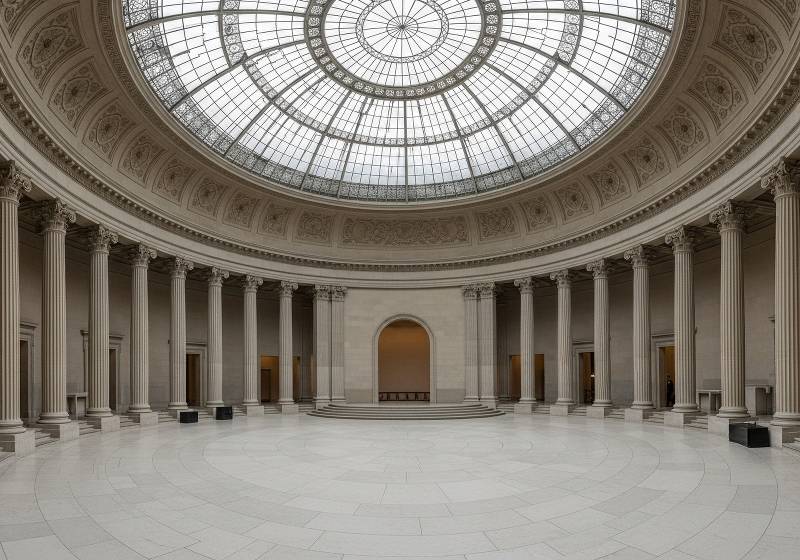
The gallery is the permanent home of Michelangelo’s David, arguably the most recognized sculpture in Western art. Moved here in 1873 to protect it from the elements, the marble masterpiece stands under a specially designed circular tribune that allows visitors to view it from every angle.

Michelangelo’s Unfinished Masterpieces

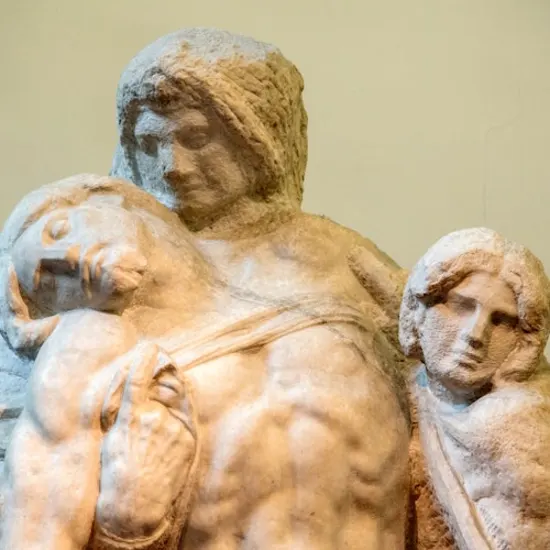
The Hall of the Prisoners displays four monumental sculptures known as the Slaves, which were intended for the tomb of Pope Julius II. These unfinished works offer a rare glimpse into Michelangelo’s "non finito" technique, showing figures seemingly struggling to emerge from the raw blocks of stone.

A Significant Collection of Musical Instruments

The Department of Musical Instruments houses an extraordinary collection from the Cherubini Conservatory, featuring items owned by the Medici and Lorena families. Highlights include a unique tenor viola and a cello crafted by Antonio Stradivari, alongside some of the earliest examples of the modern piano.

Masterpieces of Florentine Gothic Painting

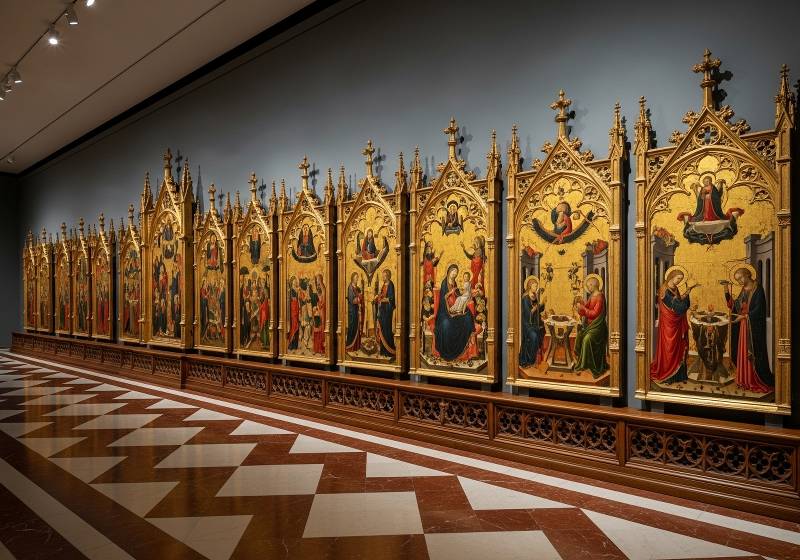
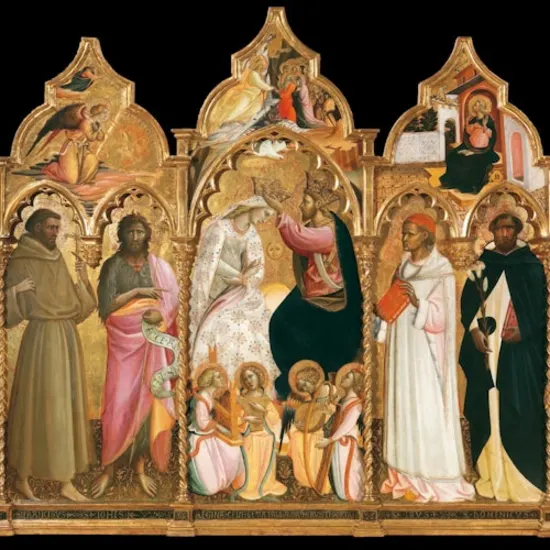
Beyond the sculptures, the museum contains an extensive collection of gold-ground paintings by Florentine masters from the 13th to the 15th centuries. These galleries provide essential historical context for the evolution of the Renaissance, featuring works by Giotto, Orcagna, and Lorenzo Monaco.

The Plaster Cast Gallery

The Gipsoteca Bartolini recreates the atmosphere of a 19th-century sculptor’s studio with hundreds of plaster casts by Lorenzo Bartolini and Luigi Pampaloni. This dense arrangement of busts and funerary monuments showcases the neoclassical aesthetic and the meticulous process behind marble portraiture.

Horaires

Horaires d’ouverture habituels: La galerie est ouverte Du mardi au dimanche de de 08 h 15 à 18 h 50.

Dernière admission: L’accès au musée est autorisé jusqu’à 18 h 20, et la billetterie ferme peu avant cette heure.

Procédures de clôture: Le personnel du musée entame les procédures de fermeture 10 min avant l’heure officielle de fermeture ; par conséquent, l’accès aux salles des instruments de musique du rez-de-chaussée et à toutes les salles d’exposition du premier étage est interdit après 18 h 40.

Fermeture hebdomadaire: Le musée est fermé au public tous les lundis.

Fermetures annuelles: La galerie est fermée le 1er janvier (jour de l’An) et le 25 décembre (jour de Noël).

Durée recommandée et heure d’arrivée:
Une visite complète dure généralement de 60 à 90 min, le temps de découvrir les principaux chefs-d’œuvre et la collection d’instruments de musique.
Pour les personnes ayant réservé un billet, il est recommandé d’arriver au point d’entrée indiqué 15 min avant l’heure prévue de votre créneau horaire afin de passer les contrôles de sécurité.

How Do I Get There?

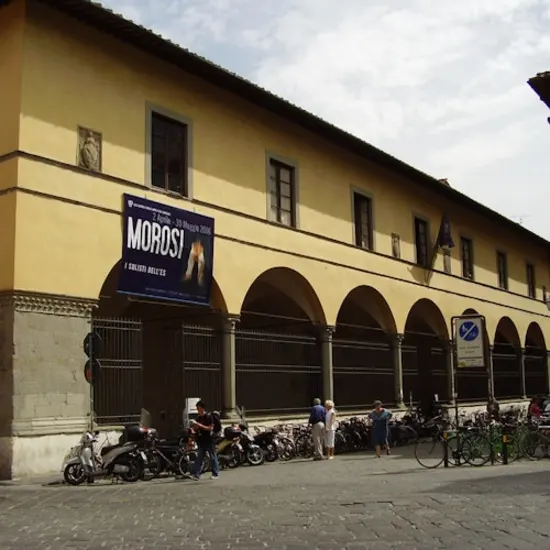
La Galleria dell’Accademia se trouve au cœur du centre historique de Florence. Grâce à son emplacement central, le musée est facilement accessible par divers moyens de transport, même si la marche est souvent le moyen le plus pratique pour ceux qui se trouvent déjà en ville.

Adresse: Galleria dell’Accademia di Firenze, Via Ricasoli, 58/60, 50122 Florence (FI), Italie

La marche est le moyen le plus courant pour se rendre à la galerie depuis les autres sites touristiques majeurs. Le musée est situé dans une zone piétonne très fréquentée, entre le Duomo et la place Saint-Marc.

Depuis le Duomo (cathédrale Santa Maria del Fiore): À 5 min à pied en direction du nord par la Via dei Ricasoli.

Depuis la Piazza della Signoria / Galerie des Offices: Environ de 12 à 15 min à pied à travers le centre historique.

Depuis la gare de Santa Maria Novella: Environ de 10 à 15 min à pied en passant par la Via Nazionale et la Via Guelfa.

Things to Know Before Visiting the Galleria dell’Accademia

Advanced booking is highly recommended, as the gallery enforces a strict visitor capacity and walk-in wait times can exceed several hours during peak season.

Visitors with a reservation must present their ticket/voucher at the dedicated "Reserved Tickets" window to collect their physical entry passes before joining the security line.

A valid government-issued photo ID is required for all visitors, especially those who have purchased reduced-price or free youth tickets for verification purposes.

Large backpacks, suitcases, and non-foldable umbrellas are prohibited inside the galleries and must be stored in the free cloakroom near the entrance.

The museum is strictly closed every Monday, as well as on January 1st and December 25th.

Photography is permitted for personal, non-commercial use only, but the use of flash, tripods, or selfie sticks is strictly forbidden throughout the premises.

The museum layout is relatively compact, meaning a standard visit usually takes between 60 to 90 minutes to complete.

Proper attire is expected, and while there is no formal dress code, visitors should remain respectful of the cultural environment.

Water bottles are allowed only if they do not exceed 0.5 liters and must be kept inside a bag while walking through the exhibition halls.

Re-entry is not permitted under any circumstances once you have exited the museum building.

Additional Information

The Galleria dell’Accademia provides essential services to ensure a functional visit.

A mandatory cloakroom is available near the entrance where visitors must deposit umbrellas, large bags, backpacks, and any containers exceeding the dimensions of 40x30x18 cm. This service is free of charge for ticket holders and is intended to protect the artworks and maintain a clear flow of traffic within the narrow gallery corridors.

Restrooms are located on the ground floor and are clearly marked for visitor use.

To maintain the preservation of the collections, the museum is climate-controlled, and photography is permitted for personal use only, provided that flashes, tripods, or professional equipment are not used.

There is no dedicated Wi-Fi for visitors, and mobile phone usage should be kept to a minimum to respect the quiet environment of the museum.

Accessibilité

The museum is fully committed to ensuring that all visitors, including those with reduced mobility or sensory disabilities, can access the collections.

The main entrance at Via Ricasoli 58 is equipped with a ramp to accommodate wheelchairs. Once inside, the majority of the museum is located on the ground floor, which is level and easily navigable.

For access to the first-floor galleries, which house the late 14th-century Florentine paintings, a spacious elevator is available. Visitors requiring the elevator should ask staff for assistance or follow the directional signage located near the Department of Musical Instruments.

The museum provides a limited number of wheelchairs for visitors to borrow free of charge. These can be requested at the cloakroom upon arrival by leaving a valid identification document.

Additionally, the restrooms are fully equipped with accessible stalls and support rails.

For visitors with visual impairments, the museum has developed tactile pathways and provides a selection of "tactile" reproductions of certain masterpieces, allowing for a more inclusive experience of the sculpture collections.

Service animals, such as guide dogs for the blind or assistance dogs for the disabled, are permitted entry provided they are kept on a leash and the owner possesses the necessary medical certification.

Interesting Facts about The Galleria dell’Accademia di Firenze

The Galleria dell’Accademia was founded in 1784 by Grand Duke Pietro Leopoldo to provide local art students with a collection of historical works for study.

The statue of David was moved to the gallery in 1873 to protect it from weather damage after spending over 350 years outdoors in Piazza della Signoria.

A custom-built circular hall known as the Tribune was designed by architect Emilio de Fabris specifically to house Michelangelo’s David.

The skylight directly above the David was carefully engineered to provide natural illumination that highlights the detailed anatomy of the sculpture.

The gallery houses the world's most significant collection of Michelangelo's sculptures, including his four unfinished Prisoners and the statue of Saint Matthew.

The Hall of the Prisoners displays marble works that still bear the visible chisel marks of Michelangelo’s tools from the 16th century.

Beyond sculpture, the museum holds the Department of Musical Instruments, which contains one of the world's most important collections of historic violins.

The musical collection includes a unique tenor viola and a cello made by Antonio Stradivari for the Grand Prince Ferdinando de’ Medici.

The museum’s Gipsoteca Bartolini contains over 400 plaster models that offer a rare look into a 19th-century sculptor’s workshop.

The gallery is home to the Cassone Adimari, a famous 15th-century painted chest panel that provides a detailed visual record of Renaissance Florentine fashion.

The collection includes the oldest known piano in the world, built by Bartolomeo Cristofori, the inventor of the instrument.

The museum building itself occupies the former premises of two ancient convents, the Hospital of Saint Matthew and the Convent of Saint Niccolò di Cafaggio.

The gallery's extensive collection of gold-ground paintings represents one of the most complete archives of Florentine art from the 13th to 15th centuries.

In 1991, the statue of David was damaged by a man with a hammer, leading to the installation of the protective glass barrier seen today.

The museum remains the second most visited art museum in Florence, consistently ranking just behind the Uffizi Gallery in annual attendance.

FAQs about The Galleria dell’Accademia di Firenze

Quel était l’objectif initial de la Galleria dell’Accademia ?

Cette institution a été fondée en 1784 par le grand-duc Pietro Leopoldo afin de servir de galerie pédagogique aux étudiants de l’Académie des Beaux-Arts.

Pourquoi le « David » de Michel-Ange a-t-il été déplacé à cet endroit précis ?

La statue a été transférée à la galerie en 1873 afin de protéger le marbre des intempéries, après des siècles d’exposition à l’air libre.

Quelle est la signification de la « Salle des Prisonniers » ?

Cette galerie présente quatre sculptures inachevées de Michel-Ange qui révèlent sa technique unique consistant à sculpter des figures directement dans la pierre.

Le musée abrite-t-il d’autres objets que des sculptures et des tableaux ?

La galerie abrite une importante section consacrée aux instruments de musique, qui présente des pièces rares issues des collections des familles Medici et Lorena.

Que peut-on découvrir à la Gipsoteca Bartolini ?

Cette salle abrite plus de 400 modèles en plâtre et bustes qui recréent l’atmosphère d’un atelier de sculpture traditionnel du XIXe siècle.

Quelles sont les œuvres d’art les plus anciennes exposées à la galerie ?

La collection comprend un vaste éventail de peintures gothiques florentines sur fond d’or datant du XIIIe siècle.

Quels fabricants d’instruments de musique célèbres sont représentés dans la collection ?

Les visiteurs peuvent admirer des instruments historiques fabriqués par Antonio Stradivari et Bartolomeo Cristofori, l’inventeur du piano.

Quelles sont les heures d’ouverture habituelles du musée ?

La galerie est ouverte du mardi au dimanche, de 08 h 15 à 18 h 50.

La galerie est-elle ouverte le lundi ?

Le musée est fermé au public tous les lundis, tout au long de l’année.

Combien de temps dois-je prévoir pour une visite complète ?

La plupart des visiteurs estiment qu’il suffit de 60 à 90 min pour découvrir les principaux chefs-d’œuvre et les sections thématiques.

Puis-je entrer au musée sans réservation préalable ?

Bien que les visites sans rendez-vous soient autorisées, il est vivement recommandé de réserver à l’avance afin d’éviter des temps d’attente pouvant durer plusieurs heures.

Y a-t-il des consignes pour les grands sacs ou les parapluies ?

A free mandatory cloakroom is available for visitors to store backpacks, large bags, and non-foldable umbrellas.

Is photography permitted inside the exhibition halls?

Personal, non-commercial photography is allowed as long as you do not use a flash, tripod, or selfie stick.

What is the best way to reach the gallery from the main train station?

The museum is an easy 10-to-15-minute walk from Firenze Santa Maria Novella station or a short 5-minute taxi ride.

Are there dining facilities available inside the building?

There are no cafes or restaurants inside the gallery, and food or drink consumption is strictly prohibited on-site.

Ce site Internet propose des billets officiels pour les lieux mentionnés, vendus par Tourism Tickets. Veuillez toutefois noter qu’il ne s’agit pas du site officiel de l’un de ces lieux.

Les images et vidéos présentes sur ce site peuvent contenir des éléments visuels créés ou améliorés à l’aide de l’intelligence artificielle. Elles sont fournies à titre purement illustratif.