We are processing your request.
Please, don't close or refresh the page.

Leaning Tower of Pisa: Tickets and Info

This website offers official tickets for this venue. Please note, however, that it is not the official website of the venue.
Smartphone tickets

Smartphone tickets

Everything you need, right in your pocket!
Why wait?

Why wait?

Skip the line and get priority access
Instant confirmation

Instant confirmation

Receive your tickets seconds after your purchase

Leaning Tower of Pisa and Pisa Cathedral: Entry Ticket

Highlights

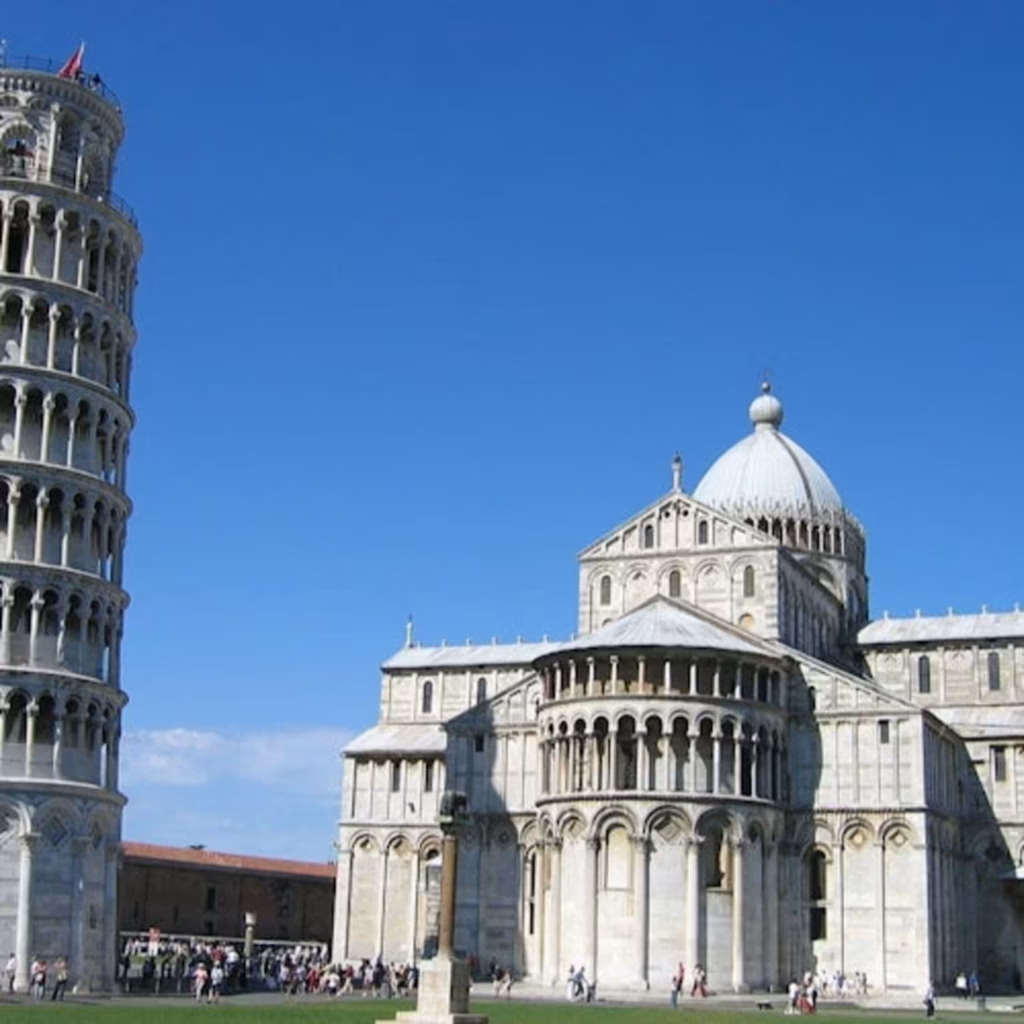
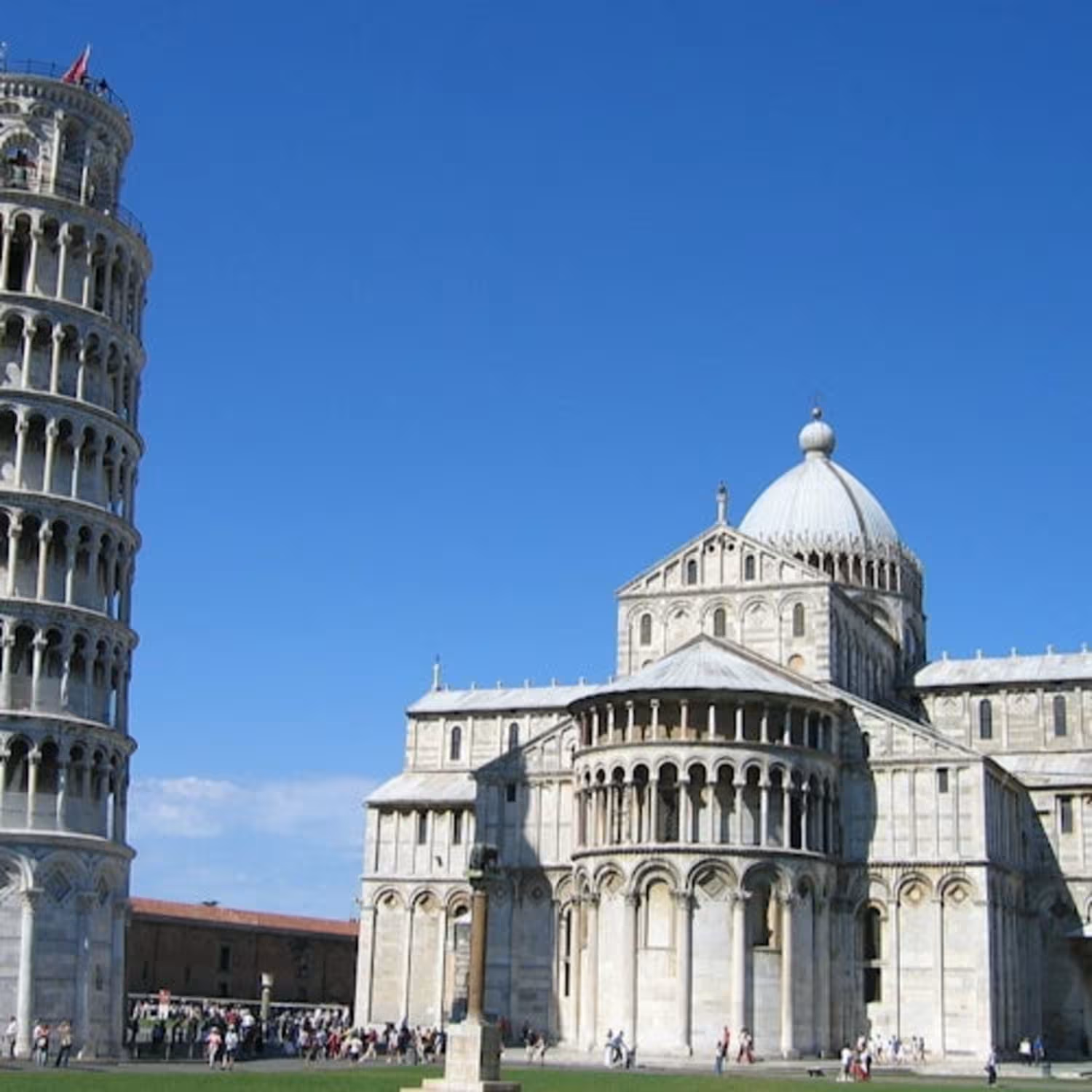
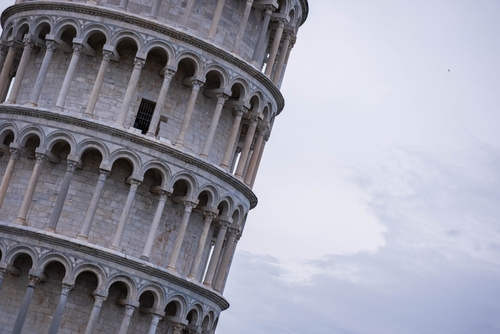
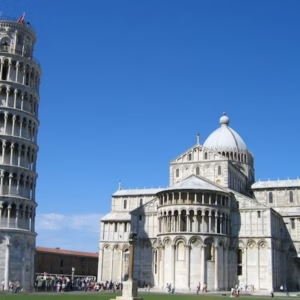
Explore the renowned Leaning Tower, known for its iconic tilt.

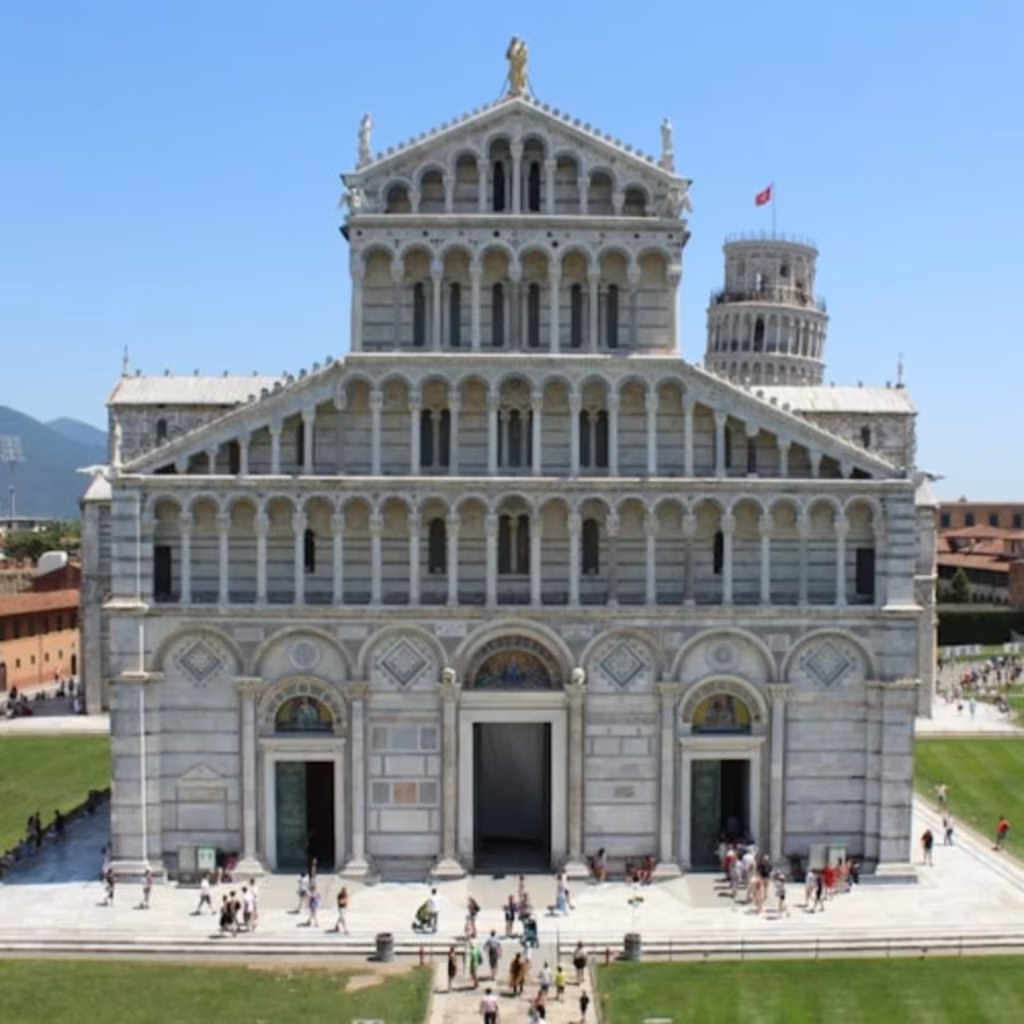
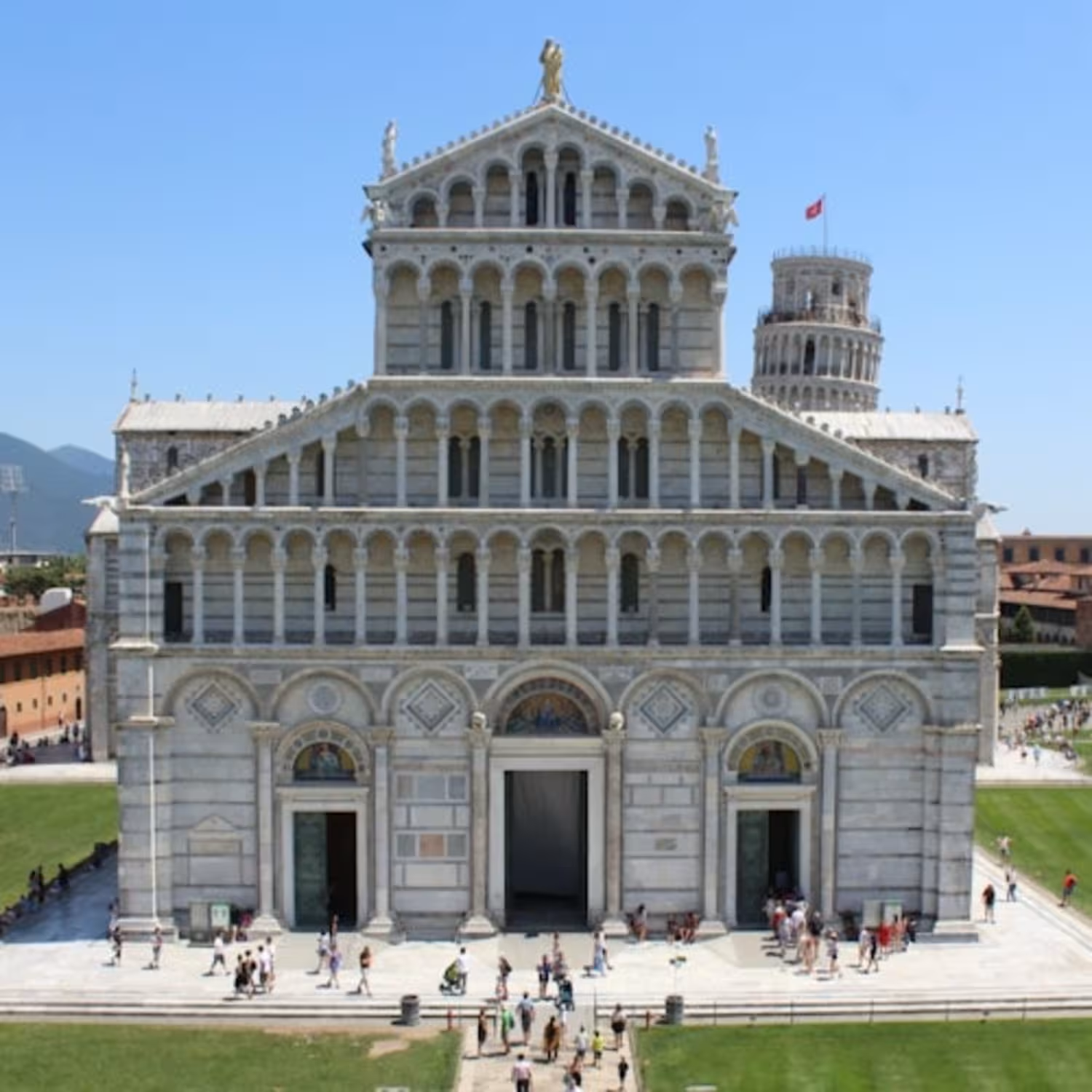
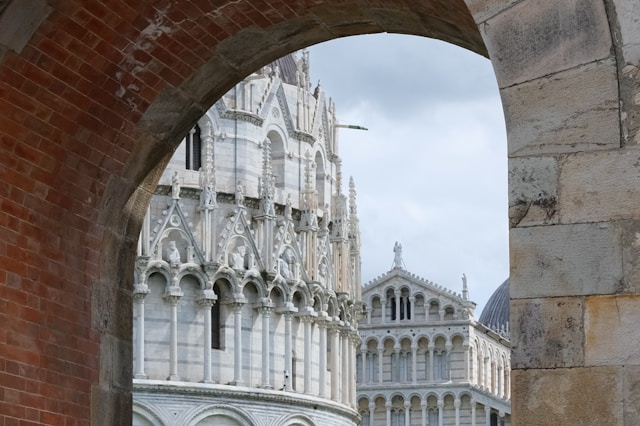
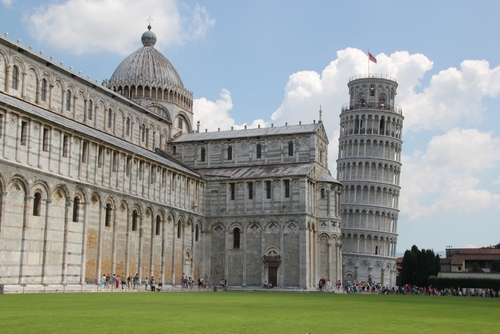
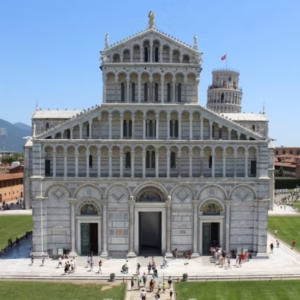
Admire the spectacular marble facade of Pisa Cathedral.

Visit the Sinopie Museum and the adjacent cemetery.

Capture memorable photos of the unique architecture.

Good to Know Before Visiting the Leaning Tower of Pisa

Children under the age of 8 are strictly prohibited from climbing the tower for safety reasons.

Minors between the ages of 8 and 18 must be accompanied by an adult at all times during the ascent.

All large bags, backpacks, and non-transparent containers must be left in the free official cloakroom before your entry time.

You must arrive at the security checkpoint at least 15 minutes before your scheduled time slot to avoid being denied entry.

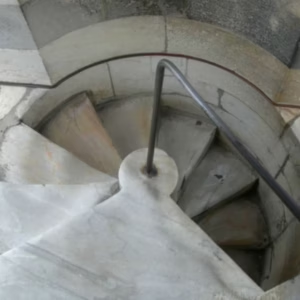
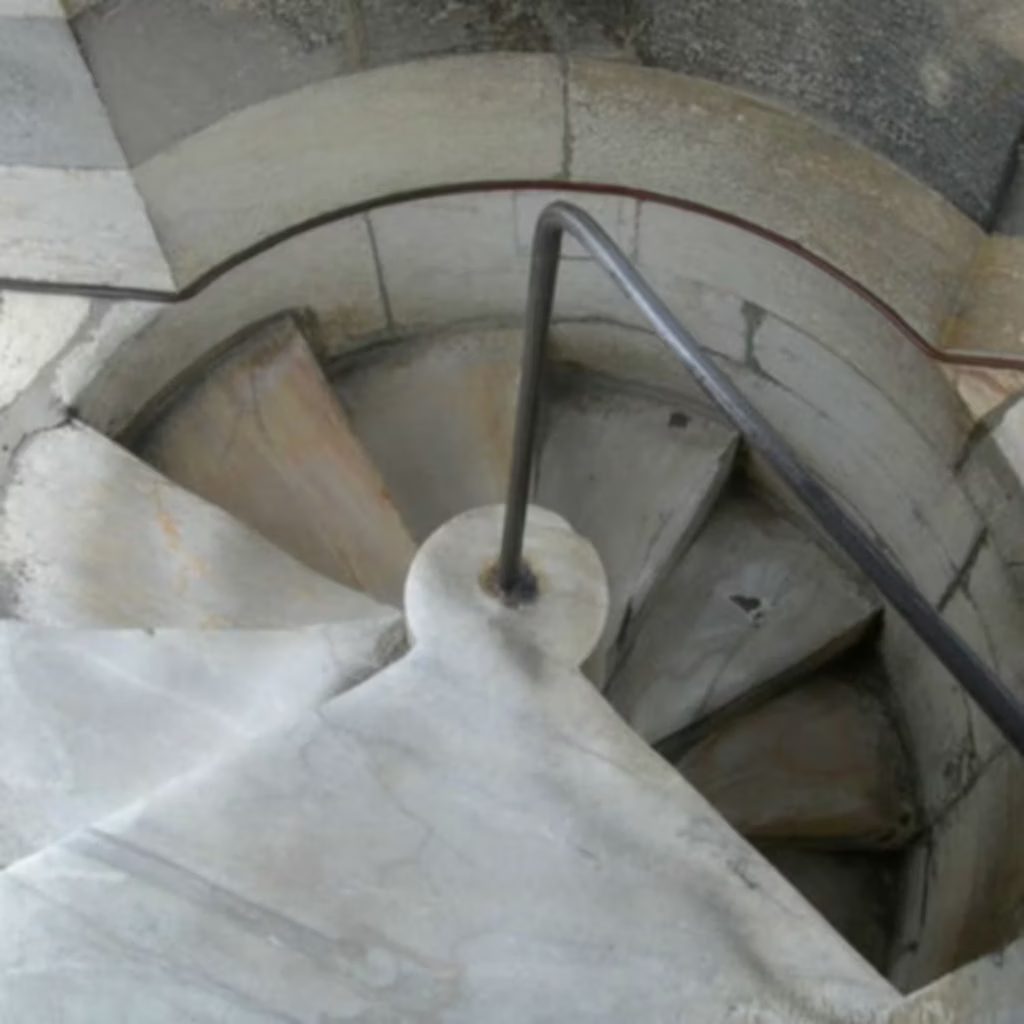
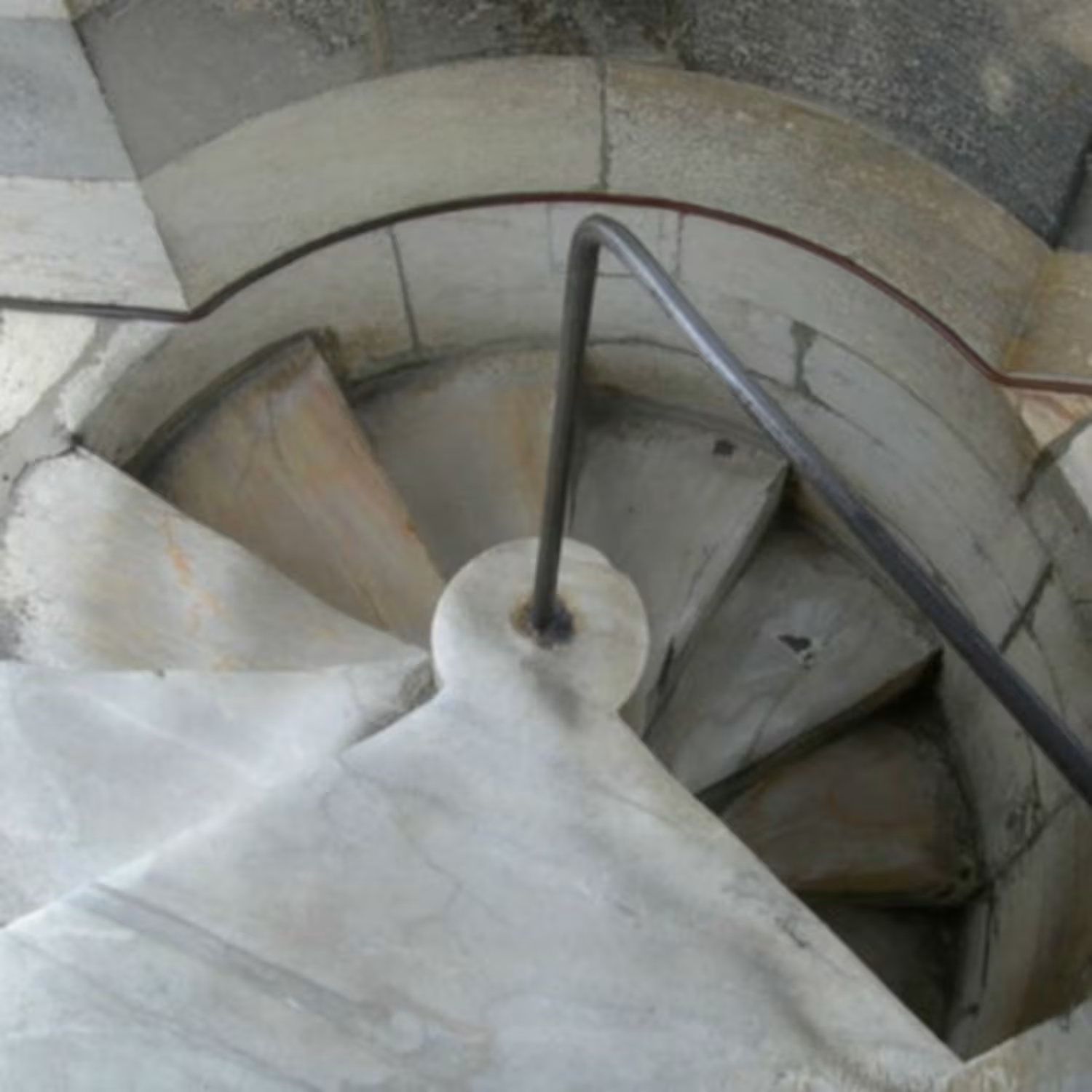
The climb involves 251 narrow and uneven marble steps and is not recommended for individuals with heart conditions or vertigo.

Modest attire that covers both the shoulders and knees is required to enter the Cathedral and other religious sites on the square.

Footwear with good grip is highly recommended, as the marble steps inside the tower can be slippery and worn.

Professional photography equipment, including tripods and large stabilizers, is generally not permitted inside the monument.

Essential Visitor Info

Opening Hours

The tower generally opens daily at 9 AM, though it may open as early as 8:30 AM during the summer months.

Closing times vary significantly throughout the year: winter hours typically end at 6 PM, while the peak summer season (mid-June through August) often features extended evening hours until 10 PM.

The Cathedral usually opens for sightseeing at 10 AM, following morning religious services.

The Best Time to Visit

To avoid the largest crowds, aim for the earliest possible morning slot or the final two hours before closing.

Midday, specifically between 11 AM and 3 PM, is the peak period for large tour groups arriving from Florence and cruise ports.

Visit Duration

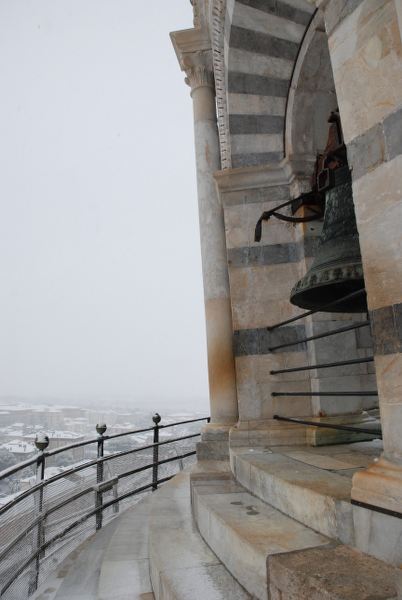
A standard climb of the Leaning Tower takes approximately 30 minutes, which includes the ascent, a few minutes at the belfry to view the bells and the skyline, and the descent.

If you plan to explore the full Piazza dei Miracoli complex - including the Cathedral, Baptistery, and Camposanto - you should budget at least 2 to 3 hours for a complete experience.

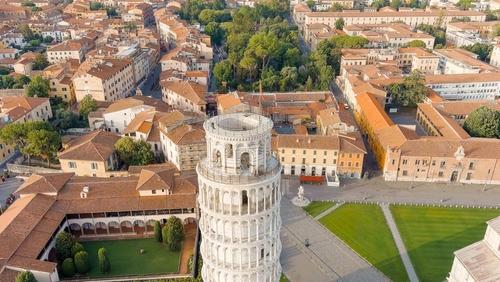
The Tower of Pisa is located within the Piazza del Duomo, also commonly referred to as the Piazza dei Miracoli (Square of Miracles). The site is situated in the northern part of the historic center of Pisa, Tuscany.

Address

Piazza del Duomo, 56126 Pisa PI, Italy

Getting There by Train

Most visitors arrive via Pisa Centrale, the city's primary railway station.

From the Station: You can reach the tower on foot in approximately 20 to 25 minutes. The walk follows a direct route through the city's pedestrian shopping streets and across the Solferino Bridge.

Local Bus: For a faster transit, take the "LAM Rossa" (Red Line) bus from the station plaza and exit at the "Via Pietrasantina" or "Torre" stop.

Pisa San Rossore: This smaller satellite station is located much closer to the monument. It is roughly a 5-minute walk from the Piazza del Duomo, though fewer regional trains stop here compared to Centrale.

Getting There by Car

If you are driving, be aware that the area surrounding the tower is a Limited Traffic Zone (ZTL), and unauthorized vehicles will be fined.

Parking: The most convenient parking is the Parcheggio Pietrasantina, located just outside the city walls. It is a large, paid parking area serviced by a shuttle bus that takes visitors to the square.

Distance from Florence: The drive from Florence takes approximately 1 hour and 15 minutes via the SGC Firenze-Pisa-Livorno (FI-PI-LI) highway.

Getting There from the Airport

Pisa International Airport (Galileo Galilei) is located just 1km from the city center.

Pisa Mover: This automated high-speed shuttle connects the airport directly to Pisa Centrale station in approximately 5 minutes. From the station, you can proceed by foot, bus, or taxi to the tower.

Getting There on Foot

Pisa is a highly walkable city. If you are already in the historic center, follow the clear brown signage for "Piazza dei Miracoli" or "Torre." The entrance to the tower complex is located through the medieval gates of the city walls, specifically the Porta Nuova or Porta Santa Maria.

Tower of Pisa (Google Maps)

The area surrounding the Leaning Tower is equipped with essential amenities to accommodate the high volume of daily visitors.

A primary requirement for those climbing the tower is the use of the free luggage cloakroom located near the entrance. Due to safety regulations, all large bags, backpacks, and non-transparent containers must be deposited here before your timed entry, as only small personal items are permitted inside the monument.

Public restrooms are available within the Piazza dei Miracoli complex, specifically near the Museo dell'Opera del Duomo and the Sinopie Museum. Please note that while some facilities require a small fee for use, they are maintained to high hygiene standards.

Additionally, an information office is situated on the square to assist with ticketing queries and map distributions for the various monuments in the cathedral complex.

Accessibility at the Leaning Tower of Pisa is significantly limited due to the historical nature of the 12th-century structure. The tower does not have an elevator, and the only way to reach the top is via the original spiral staircase, which consists of 251 narrow, uneven, and often slippery marble steps. Because of the steep incline and the physical exertion required, the climb is not accessible to wheelchair users or individuals with significant mobility impairments, heart conditions, or claustrophobia.

The Piazza dei Miracoli itself is much more accessible. The square is largely flat with paved pathways that allow wheelchairs and strollers to navigate between the main monuments. The Cathedral (Duomo) is equipped with a ramp at the rear entrance to allow access for visitors with disabilities, and the interior is spacious enough for easy maneuvering. The Baptistery also offers ground-level access, though the upper gallery is only reachable by stairs.

For visitors with visual impairments, the Museo dell'Opera del Duomo provides tactile models and descriptions to help convey the architectural layout of the square. It is important to note that while the grounds are accessible, the grass areas are typically fenced off, and movement is restricted to the designated stone walkways. Accessible restrooms are located near the museum and are clearly marked with international symbols.

About the Leaning Tower of Pisa

Originally conceived as the freestanding bell tower for the neighboring Cathedral of Santa Maria Assunta, the Leaning Tower of Pisa is a definitive example of Pisan Romanesque architecture. Construction began in 1173 and spanned nearly two centuries, plagued by significant interruptions due to regional conflicts and the building's infamous structural instability. The tower’s signature tilt is the result of a shallow three-meter foundation set in a soft, alluvial subsoil of clay and sand, which began to subside as soon as work reached the third story. Despite these early failures, medieval engineers continued the project, eventually completing the eight-story marble cylinder in 1372 with the addition of the belfry.

Structurally, the tower is composed of a hollow stone cylinder faced with white marble and decorated with intricate arcades and columns that mirror the facade of the Cathedral. The interior features a twin spiral staircase that leads visitors past the belfry to the highest viewing platform, nearly 56 meters above the ground. Following an extensive restoration project at the turn of the 21st century, the structure was successfully stabilized, reducing the lean from 5.5 degrees to approximately 4 degrees. Today, the tower remains an active campanile, housing seven bronze bells that are still rung for religious services, standing as a global icon of both artistic beauty and accidental engineering.

Height: 55.86 meters (low side) to 56.67 meters (high side)
Foundation Depth: 3 meters
Angle of Tilt: 3.97 degrees
Number of Steps: 251
Area of Piazza dei Miracoli: 21.9 acres
Main Material: White Marble and Limestone

Why Visit the Leaning Tower of Pisa?

Witness a unique architectural phenomenon

The tower is globally recognized for its unintended tilt, caused by an unstable foundation of soft ground and clay. Visiting in person allows you to observe how the structure has remained standing for centuries despite a four-degree lean that defies standard engineering expectations.

Experience the Piazza dei Miracoli

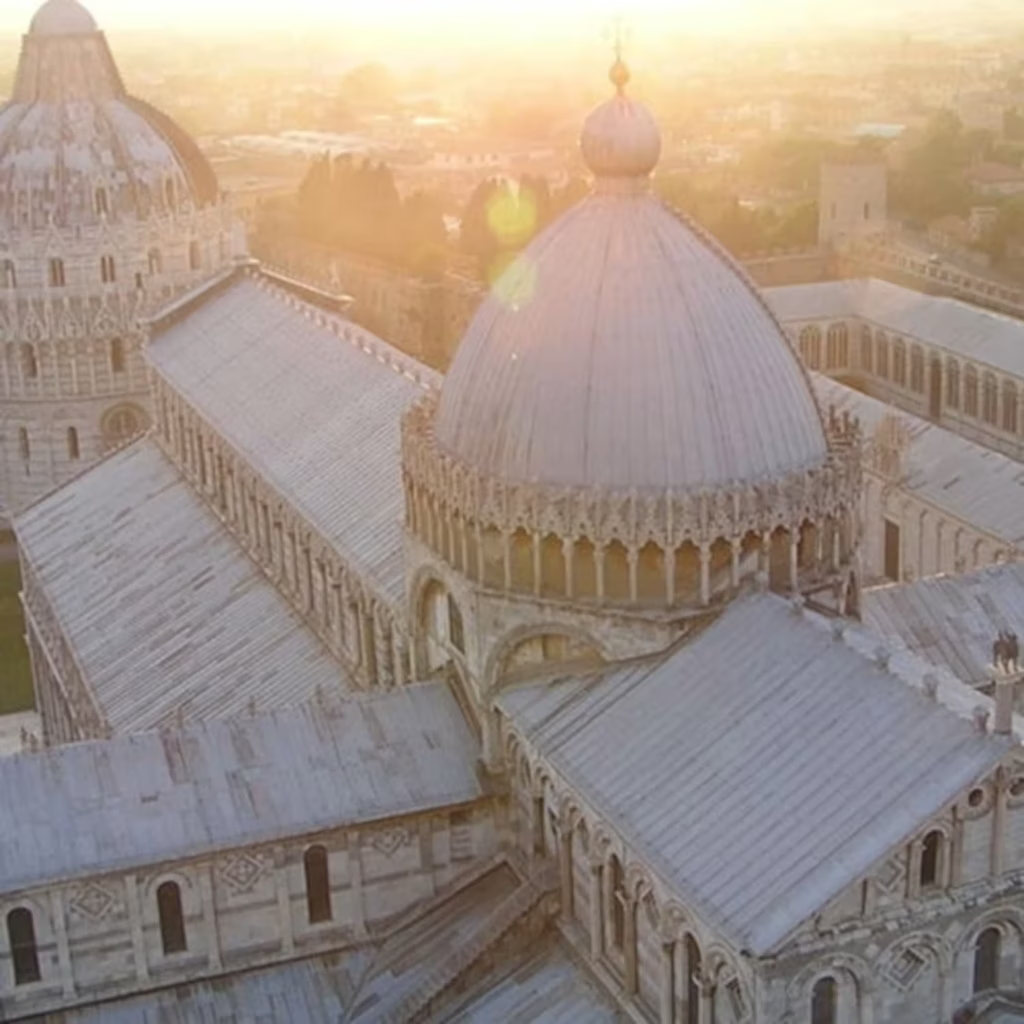
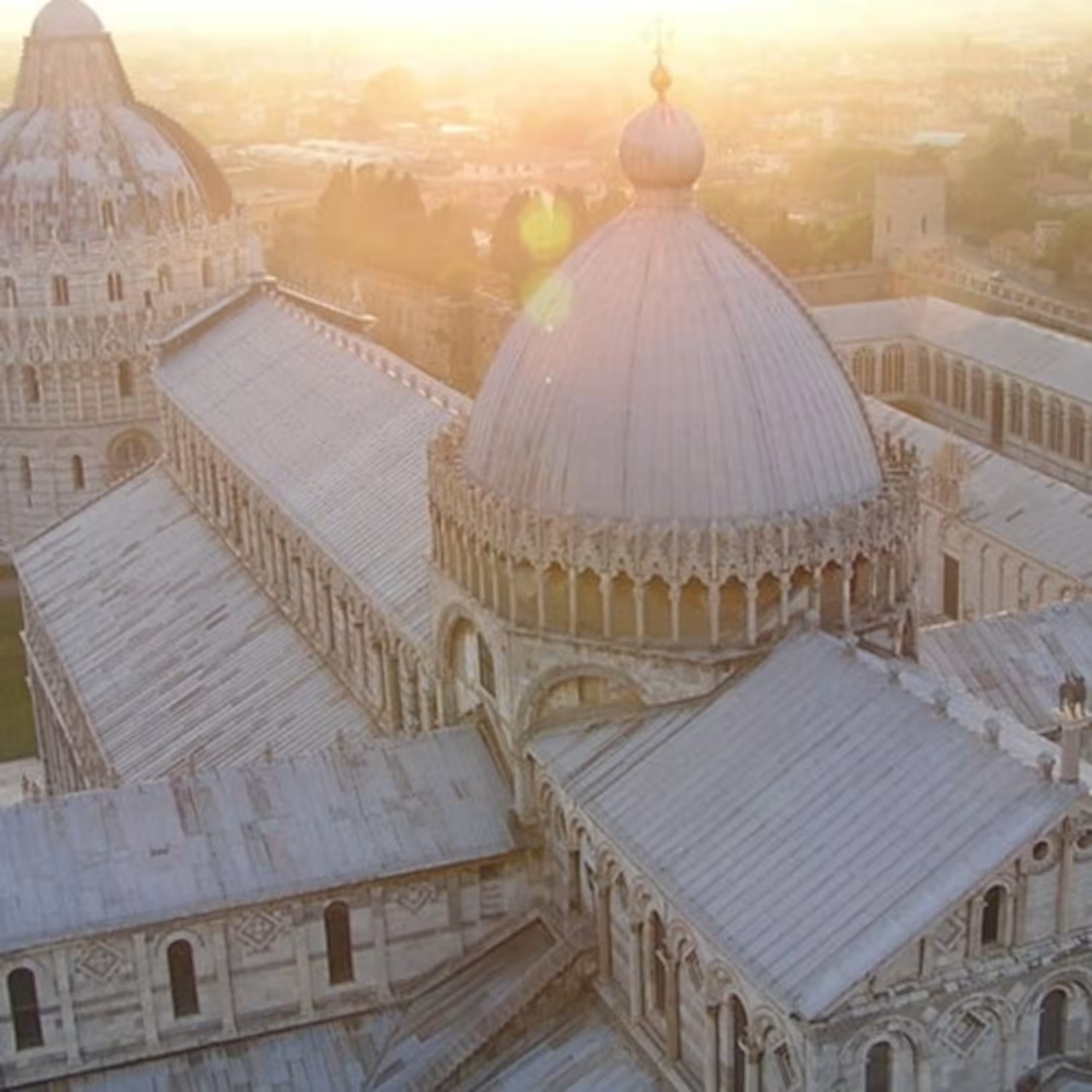
The tower serves as the bell tower for the Cathedral of Santa Maria Assunta, located within a UNESCO World Heritage site. This square hosts a concentrated collection of Romanesque masterpieces, including the Baptistery and the Camposanto, offering a comprehensive look at medieval Italian art and architecture.

Climb the historic spiral staircase

Visitors can ascend the 251 steps to the top of the tower for a physical perspective on its orientation. The climb provides a unique sensation as the tilt shifts your center of gravity, culminating in an open-air view of the city of Pisa and the surrounding Tuscan landscape.

Examine intricate Romanesque craftsmanship

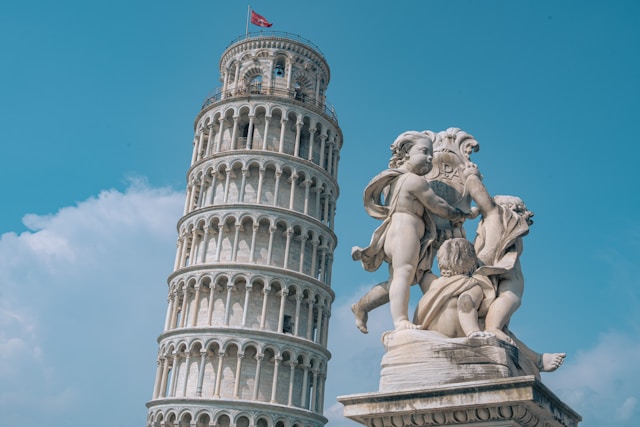
Beyond its lean, the tower is a feat of medieval masonry featuring eight tiers of white marble arches and limestone columns. The detailed carvings and blind arcades at the base represent the height of Pisan Romanesque style, which influenced building trends throughout the Mediterranean.

View the historic bells

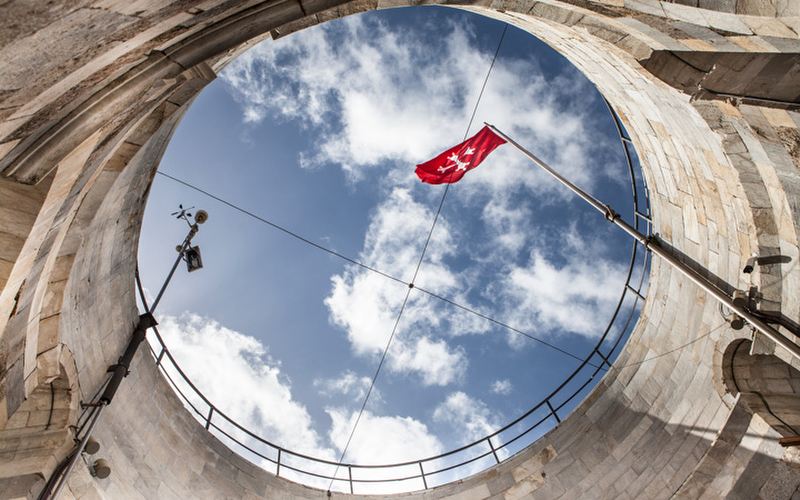
The seventh floor houses seven bronze bells, each tuned to a different note of the musical scale. Reaching the belfry allows you to see these massive instruments up close and understand the tower's original functional purpose as a campanile for the neighboring cathedral.

Leaning Tower of Pisa - Additional Info

While dining is not permitted inside the monuments or on the lawns of the Piazza dei Miracoli, the immediate neighborhood offers numerous options ranging from quick-service cafes to traditional Tuscan trattorias.

For a brief stop, several "bar" style establishments located just outside the medieval walls serve espresso, panini, and local pastries. These are ideal for visitors with tight schedules between monument entry times.

For a more formal meal, walking a few blocks away from the main tourist thoroughfare toward the Cavalieri Square or the Arno River will reveal authentic local eateries. These restaurants often serve regional specialties such as cecina (a savory chickpea pancake) or Pisan-style tripe.

Many establishments offer outdoor seating with views of the historic city walls, providing a quieter atmosphere away from the densest crowds of the square.

Tower of Pisa (Google Maps)

Official bookshops are located within the Museo delle Sinopie and the Museo dell'Opera del Duomo.

These stores offer a curated selection of high-quality merchandise, including academic publications on Pisan Romanesque architecture, detailed scale models of the tower, and specialized photography books. These official outlets focus on historical accuracy and provide items that reflect the cultural significance of the UNESCO site.

Beyond the official shops, the streets leading to the Piazza, such as Via Santa Maria, are lined with independent vendors. These stalls provide a wide variety of commercial souvenirs, ranging from postcards and apparel to the iconic miniature replicas of the leaning structure. While these vendors offer more casual mementos, visitors looking for certified replicas or deep-dive historical texts should prioritize the museum shops.

Interesting Facts about the Leaning Tower of Pisa

The tower took approximately 199 years to complete, with construction beginning in 1173 and finishing in 1372.

The structure began to lean during the construction of the second floor because it was built on soft ground composed of clay, fine sand, and shells.

Construction was halted for nearly a century due to ongoing wars between Pisa and neighboring city-states, which inadvertently allowed the soil to settle.

The architect of the tower remains a subject of historical debate, though it is often attributed to Bonanno Pisano or Diotisalvi.

The tower stands at approximately 56 meters tall, though the height of the low side is slightly less than the height of the high side.

The walls are over four meters thick at the base, providing the necessary support for the eight-story marble structure.

There are seven bells in the belfry, with each one representing a different note of the major musical scale.

Galileo Galilei is said to have dropped two cannonballs of different masses from the tower to demonstrate his law of free fall.

During World War II, the tower was almost destroyed by American soldiers who suspected it was being used as an observation post by the German army.

The tower currently leans at an angle of nearly four degrees, which is significantly less than the 5.5 degrees it reached before restoration work in the 1990s.

Modern engineering efforts between 1990 and 2001 successfully straightened the tower by 44 centimeters to ensure its long-term stability.

The foundation is only three meters deep, which is remarkably shallow for a stone building of its weight and height.

The tower is built with an internal curve as medieval builders tried to compensate for the tilt by making the upper floors taller on one side.

The total weight of the Leaning Tower is estimated to be around 14,500 metric tons.

In 1987, the tower was declared a UNESCO World Heritage site as part of the Piazza del Duomo complex.

FAQs about the Leaning Tower of Pisa

What was the original purpose of the Leaning Tower of Pisa?

The tower was designed as a freestanding bell tower, or campanile, to serve the neighboring Cathedral of Santa Maria Assunta.

Why does the tower lean?

The tilt is caused by a shallow foundation set in soft subsoil composed of clay, fine sand, and shells.

How long did it take to build the structure?

Construction spanned approximately 199 years, beginning in 1173 and finally reaching completion in 1372.

Can the tower still ring its bells?

The tower remains an active campanile housing seven bronze bells that are still rung for religious services today.

Is the tower safe to climb after all these years?

Extensive restoration work between 1990 and 2001 stabilized the structure and reduced the tilt to ensure long-term safety for visitors.

What architectural style does the tower represent?

The structure is a primary example of Pisan Romanesque architecture, characterized by its white marble facade and tiered colonnades.

Are children allowed to climb the tower?

Children under the age of 8 are strictly prohibited from the climb, while those between 8 and 18 must be accompanied by an adult.

How many steps are in the Leaning Tower?

The climb to the top involves ascending 251 narrow and uneven marble steps.

Is there an elevator available for visitors?

There is no elevator in the tower, and the only way to reach the belfry is via the historic spiral staircase.

Where can I leave my bags before the climb?

All large bags and backpacks must be deposited at the free official cloakroom located near the tower entrance.

What is the dress code for the site?

Visitors must wear modest attire that covers both the shoulders and knees to enter the Cathedral and other religious buildings.

How long does a visit to the tower take?

A standard climb takes about 30 minutes, though you should budget 2 to 3 hours to explore the entire Piazza dei Miracoli.

What happens if I miss my scheduled time slot?

Entry is strictly organized by timed blocks, and late arrivals will be denied entry without a refund or exchange.

Can I reach the tower easily from the Pisa train station?

The tower is a 20 to 25-minute walk from Pisa Centrale station, or a short trip via the LAM Rossa bus line.

This website sells official tickets for this venue. Please note, however, that it is not the official website of the venue.
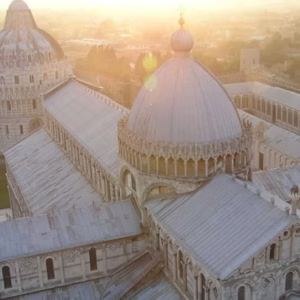
The images and videos on this website may contain visual elements that have been created or enhanced using AI technology. They are provided for illustrative purposes only.